
RNP Approach Operations: WAAS, RAIM & LPV Minimums Explained

Archives for Flying RNP Approach Operations: Understanding WAAS, RAIM & Approach Integrity Your GPS shows a solid position fix, you’ve loaded the approach, and the plate says LPV minimums of 200 feet — but does your equipment actually have the integrity authorization to fly that line of minima? For many pilots, the honest answer is: […]
RVSM Airspace: Requirements, Equipment & Authorization

Archives for RVSM Airspace Explained: Equipment, Authorization, and Ops Requirements RVSM airspace — the band of controlled airspace from FL290 to FL410 where vertical separation is reduced from 2,000 feet to 1,000 feet — doubled usable flight levels in some of the world’s busiest corridors. But that efficiency gain comes with a compliance obligation that […]
Pilot Records Database: Part 135 Reporting Requirements

Archives for Pilot Records Database (PRD): What Part 135 Operators Must Report — and When Under 14 CFR § 111.225, Part 135 operators generally have 30 days from the effective date of a covered record to report it to the FAA’s pilot records database. Miss that window, and the operator faces potential enforcement action — […]
Electronic Flight Bag Part 135: EFB Classes & Approval Guide

Archives forElectronic Flight Bag (EFB) in Part 135: Requirements, Classes, and Approval If your Part 135 crews are using tablets in the cockpit without OpSpec A061, you may already have a compliance gap — even if the devices work perfectly. An electronic flight bag is a portable or installed electronic information system used by flight […]
Operational Control Part 135: Who Owns the Go/No-Go Decision?

Archives for Operational Control in Part 135: Who Really Owns the Go/No-Go Decision? It is 11 p.m. The charter client’s assistant is on the phone insisting the aircraft depart in 45 minutes despite a line of thunderstorms moving across the departure corridor. The broker has already told the client the flight is confirmed. The PIC […]
Runway Incursions Prevention: Taxi & Hot Spot Errors

Archives for Runway Incursions Start Small: The Taxi, Clearance, and Hot Spot Errors Pilots Miss More than 1,200 runway incursions occur in the United States every year — and pilot deviations account for roughly 60% of them, according to compiled industry data. But here’s the part most pilots overlook: almost none of those events started […]
Part 135 Recurrent Training Requirements: Complete Compliance Guide

Archives for Part 135 Recurrent Training: What Gets Reviewed, Checked, and Too Often Overlooked When was the last time you verified that every pilot on your Part 135 certificate is actually current—not just trained, but current under every applicable recurrent requirement? Part 135 recurrent training spans at least four distinct regulatory elements—ground training, competency check, […]
Aviation Safety Action Program (ASAP) Explained | How It Works

Archives forAviation Safety Action Program: How ASAP Turns Voluntary Reports Into Safer Operations What happens when a pilot catches an error — a missed altitude restriction, a procedural slip during a high-workload phase — but decides not to report it because they fear the consequences? The hazard doesn’t disappear. It stays hidden in the system, […]
Controller Pilot Data Link Communications (CPDLC) Explained

Archives forWhat Is CPDLC? A Plain-English Guide to Controller Pilot Data Link Communications Imagine you’re at FL370 over the North Atlantic, 800 miles from the nearest VHF relay station. You need a higher altitude to optimize fuel burn, but the voice frequency is congested — three other crews are trying to get through to Shanwick […]
AC 90-108: RNAV Substitution Rules Every IFR Pilot Must Know
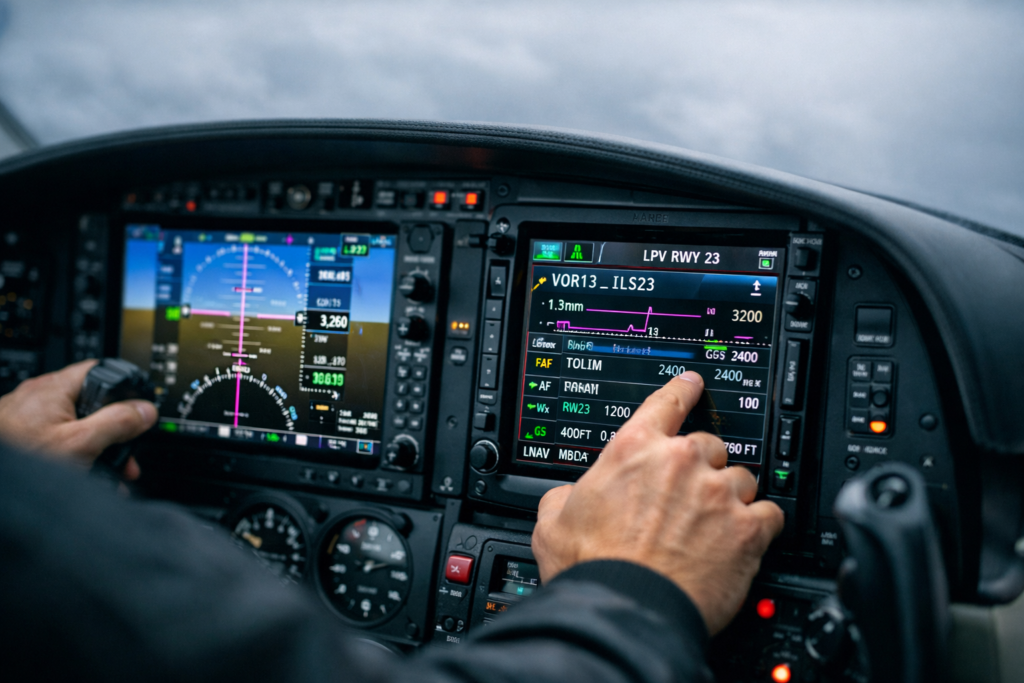
Archives for AC 90-108 Explained: Using RNAV in Place of Ground-Based Navaids Can your GPS legally replace that VOR on your next instrument approach? The answer depends on more variables than most pilots realize. FAA Advisory Circular AC 90-108—active and unchanged since 2011—defines exactly when a suitable RNAV system may substitute for ground-based navaids on […]