What the FAA’s Proposed Oxygen Mask Rule Changes Mean for Part 135 and Part 91 Operations
The Federal Aviation Administration‘s oxygen mask rules, written for cockpit designs and operational assumptions that bear little resemblance to modern pressurized aircraft, have remained essentially unchanged since the 1960s and 1970s.
On September 24, 2026, the agency published an NPRM that would raise altitude thresholds for mandatory mask wear under Part 135 and relax mask-wear requirements for Part 91 operations when quick-donning equipment is available. These proposed FAA oxygen mask rule changes for 2026 represent the most significant revision to pilot oxygen regulations in over half a century.
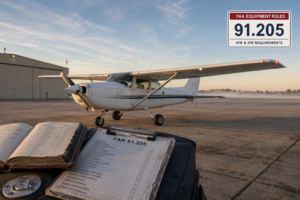
The NPRM, titled “Flight Operations: Pilot requirements; Use of oxygen,” targets two specific regulations — 14 CFR 135.89 and 14 CFR 91.211 — that govern when pilots must physically wear oxygen masks during pressurized flight at high altitude. Every Part 135 charter operator and Part 91 flight department operating pressurized aircraft is affected. What follows is a clear breakdown of what the FAA oxygen mask proposal changes, who bears the operational impact, and what training managers and chief pilots should do right now — even before the final rule is issued.
FAA Proposes First Major Overhaul of Pilot Oxygen Mask Rules in Decades
The FAA’s NPRM, published September 24, 2026, is rooted in a congressional directive. The FAA Reauthorization Act of 2024 instructed the agency to revisit pilot oxygen requirements for Part 135 and Part 91 operations. The result is a proposed rule that would fundamentally restructure when pilots must wear — not merely have access to — oxygen masks in pressurized aircraft at altitude.
The current FAA oxygen mask rules date to the 1960s and 1970s, an era of markedly different cockpit ergonomics, pressurization systems, and operational profiles. Modern business jets and turboprops routinely cruise at flight levels that trigger mandatory mask wear under rules that predate them by decades. NBAA has described the FAA oxygen mask proposal as the culmination of years of industry advocacy, arguing that the existing framework imposes operational burden without a proportional safety benefit — particularly when quick-donning oxygen masks are immediately accessible.
This is a regulatory development with direct consequences for crew procedures, standard operating practices, and training curricula. It is not a certification change affecting aircraft design. It is an operational rule, and operators who track it closely now will be positioned to act when — and if — it becomes final.
Current vs. Proposed Oxygen Mask Requirements: A Side-by-Side Comparison
The core of the NPRM is a set of revised flight level altitude thresholds that determine when pilots must wear oxygen masks. The proposed rule also draws a critical legal distinction between mask availability (having a quick-donning oxygen mask immediately accessible) and mask wear requirement (physically wearing a mask during flight). Understanding this distinction is essential for every affected operation.
The following comparison outlines what changes — and what stays the same — across four operational categories under the proposed aviation oxygen regulations.
Operation Type | Current Mask-Wear Threshold | Proposed Mask-Wear Threshold |
|---|---|---|
Part 135, Multi-Pilot | Above FL350 | Above FL410 |
Part 135, Single-Pilot | Above FL250 | Above FL350 |
Part 91, Quick-Donning Masks Available | Above FL350 | No mask-wear requirement at any certified altitude |
Part 91, No Quick-Donning Masks | Above FL350 | Above FL350 (unchanged) |
Part 135 Multi-Pilot Operations
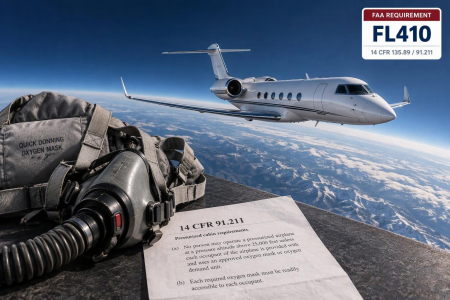
Under the current 14 CFR 135.89, at least one pilot at the controls must wear an oxygen mask above FL350 during multi-pilot pressurized operations. The FAA NPRM proposes raising that threshold to FL410 — a 6,000-foot expansion of the operational window where crews can fly without mandatory mask wear. This directly affects high-altitude business jet and turboprop charter routes, aligning the Part 135 oxygen mask altitude requirements with the capabilities of modern aircraft that routinely cruise between FL350 and FL410.
Under the current rule, when one pilot leaves the duty station above FL250, the remaining pilot must don and use an approved oxygen mask until the other pilot returns. The NPRM revises this broader framework as part of the proposed changes.
Part 135 Single-Pilot Operations
The current Part 135 single-pilot oxygen mask threshold is FL250. The proposed rule raises it to FL350 — a 10,000-foot shift and the largest single threshold change in the NPRM. This is the most operationally significant provision for solo commercial pilots, particularly those flying air taxi and on-demand charter operations in pressurized turboprops and light jets. Under the proposed rule, a single pilot in Part 135 operations would not be required to wear a mask until above FL350, provided the operation complies with revised pilot oxygen requirements.
Part 91 Pressurized Aircraft
The Part 91 pressurized aircraft oxygen mask requirement change follows a two-track approach. If quick-donning oxygen masks are available, pilots may operate at any certified altitude without wearing a mask. If quick-donning masks are not available, the existing FL350 mask-wear requirement remains in effect.
This is equipment-dependent relief, not a blanket removal of the mask requirement. The distinction between mask availability and mask wear requirement is the legal and operational hinge of the Part 91 proposal. Operators cannot claim the relief unless their aircraft are equipped with compliant quick-donning equipment positioned for immediate access.
What This Means for Charter, Corporate, and General Aviation Operators
Part 135 charter operators stand to gain meaningful operational flexibility at high altitude. Modern pressurized aircraft with robust environmental control systems and installed oxygen equipment are designed for sustained high-altitude cruise. The proposed rule, if finalized, would reduce the procedural burden of routine mask wear during normal operations between FL350 and FL410 for multi-pilot crews, and between FL250 and FL350 for single-pilot crews. The FAA projects cost savings for operators, though specific figures have not been widely reported.
Part 91 corporate and business aviation operators should recognize that the quick-donning mask provision offers functionally unlimited altitude relief — but only if the equipment is available and properly positioned. Flight departments must verify that their installed oxygen systems and quick-donning mask specifications meet the standard defined in the proposed rule. This is not assumed; it must be confirmed aircraft by aircraft.
Single-pilot Part 135 operators will see the most dramatic day-to-day change. The FL250-to-FL350 jump removes the mask-wear requirement for a wide band of altitudes that many air taxi and on-demand flights routinely use. NBAA has framed the overall proposal as reducing unnecessary cockpit burden while preserving safety through quick-donning equipment availability.
Across all categories, the proposal affects crew coordination, descent and emergency procedures, and standard operating practices. It is an operational rule — not a certification issue — and operators should treat it accordingly when assessing impact on their flight departments.
Key Misconceptions About the Proposed FAA Oxygen Mask Rule Changes
Misconception: The proposal eliminates oxygen-mask requirements.
Reality: The NPRM raises thresholds and relaxes routine mask wear in specific, defined cases. It does not remove the underlying requirement for oxygen availability and mask use when conditions demand it. Pilot oxygen requirements still apply — the question is when the mask must be on the face versus immediately accessible.
Misconception: Part 91 pilots will never need masks above FL350.
Reality: The proposed relief depends entirely on quick-donning oxygen mask availability. Without compliant quick-donning equipment on board and accessible, the FL350 mask-wear requirement remains unchanged. This is not automatic.
Misconception: Part 135 single-pilot and multi-pilot rules are the same under the proposal.
Reality: The NPRM sets different thresholds for each: FL350 for single-pilot operations and FL410 for multi-pilot operations. Operators running mixed fleets or staffing configurations must track both thresholds separately.
Frequently Asked Questions: FAA Pilot Oxygen Mask Rule Changes
What altitude do Part 135 pilots have to wear oxygen masks under the proposed FAA rule?
Under the proposed FAA oxygen mask rule changes, Part 135 multi-pilot crews would be required to wear oxygen masks above FL410 (raised from FL350). Part 135 single-pilot operations would require mask wear above FL350 (raised from FL250). These thresholds apply only if the NPRM is finalized — current requirements under 14 CFR 135.89 remain in effect in the interim.
Does the proposed FAA rule eliminate oxygen mask requirements for Part 91 pilots?
No. The proposed FAA oxygen mask rule does not eliminate mask requirements for Part 91 pilots. It provides altitude relief only when compliant quick-donning oxygen masks are immediately accessible. If quick-donning masks are not available, the existing requirement to wear a mask above FL350 remains unchanged under 14 CFR 91.211.
What is a quick-donning oxygen mask and how does it affect FAA compliance?
A quick-donning oxygen mask is a FAA-approved oxygen mask designed to be placed on the face, properly sealed, and supplying oxygen within five seconds using one hand. Under the proposed FAA oxygen mask rule changes, Part 91 operators equipped with compliant quick-donning masks may operate pressurized aircraft at any certified altitude without the pilot physically wearing the mask during normal operations.
How do the proposed FAA oxygen mask changes affect single-pilot Part 135 operations?
The proposed FAA rule raises the single-pilot Part 135 oxygen mask threshold from FL250 to FL350 — a 10,000-foot shift and the largest single threshold change in the NPRM. This is the most operationally significant provision for air taxi and on-demand charter pilots flying pressurized turboprops and light jets at mid-to-high altitudes.
When will the FAA finalize the proposed oxygen mask rule changes?
The timeline for finalization is uncertain. The NPRM is open for public comment under Docket No. 2026-19584. After the comment period closes, the FAA will review submissions before issuing a final rule or revising the proposal. NPRM-to-final-rule cycles typically take months to years. Current FAA oxygen mask rules under 14 CFR 135.89 and 14 CFR 91.211 remain in full effect until a final rule is published.
Training and Compliance: What to Do Before the Final Rule
A proposed rule is not a final rule. Current compliance requirements under 14 CFR 135.89 and 14 CFR 91.211 remain in full effect until the FAA completes the rulemaking process. That said, waiting until finalization to begin preparing is a missed opportunity. The following action items are directed at training managers, chief pilots, directors of operations, and safety officers.
1. Audit current training modules. Do Part 135 and Part 91 high-altitude training programs accurately reflect the current thresholds? If existing courseware references outdated or imprecise altitude requirements, fix that first. Any gap in current-rule accuracy undermines the credibility of future-rule training.
2. Prepare draft SOP and checklist revisions. Map proposed thresholds to crew procedures — but label these clearly as draft materials tied to the NPRM. Do not implement them as compliance standards. Crews must understand the difference between what is proposed and what is required today.
3. Update scenario-based training for quick-donning mask procedures. The key safety question under the proposed framework is immediate accessibility and donning time. Training should cover where the quick-donning oxygen mask must be located, how fast it must be donnable, and how to manage a decompression emergency or pilot incapacitation event when the mask is available but not being worn.
4. Reinforce cockpit crew resource management modules. Seat-leaving procedures, altitude transitions, and emergency mask deployment all shift under the proposed thresholds. CRM training should address how crew coordination changes when one pilot is no longer masked above FL350 in a Part 135 multi-pilot operation, for example.
5. Structure content into microlearning modules. A four-part framework works well: “current rule,” “proposed rule,” “equipment requirements,” and “what changes for your operation.” This approach reduces confusion during the rulemaking period and ensures crews are compliant with current FAA oxygen mask rules while understanding where the regulations are headed.
For operators looking to get ahead of these changes, structured e-learning programs that separate current requirements from proposed changes can reduce confusion and keep crews compliant throughout the rulemaking period. CTS offers updated Part 135 training and IS-BAO/Part 91 training programs designed to support exactly this kind of regulatory transition.
What Comes Next in the FAA Oxygen Mask Rulemaking Process
The NPRM is now open for public comment under Docket No. 2026-19584. The FAA will review all submissions before issuing a final rule — or revising the proposal. The timeline for finalization is uncertain; NPRM-to-final-rule cycles can take months or longer, depending on the volume and complexity of public input.
Operators with direct operational experience relevant to the proposed thresholds should consider submitting comments through the FAA’s recently published rulemaking page. Real-world data on quick-donning mask donning times, high-altitude operational profiles, and crew procedure impacts will strengthen the rulemaking record.
Regardless of when the final rule lands, the direction of travel is clear. The FAA Reauthorization Act of 2024 established the statutory basis for modernizing these requirements, and the agency has responded with a detailed proposal. Operators who prepare training programs, audit their equipment, and draft SOP revisions now will be ahead of the compliance curve when updated FAA oxygen mask rules take effect. Stay current on regulatory developments and training updates by exploring CTS’s Part 135 and IS-BAO/Part 91 training resources.