
135.293 Training Online: Keep Part 135 Pilots Check-Ready

Archives for » Page 3 135.293 Training Online: How Part 135 Pilots Stay Check-Ready Picture this: you’re a Part 135 pilot, six weeks out from your recurrent competency check, flying a full charter schedule with barely enough ground time to review your operator’s manual — let alone work through systems review, emergency procedures, and oral […]
Part 135 IIMC Awareness Training: Recognition & Recovery

Archives for » Page 3 Part 135 IIMC Training: Recognition, Recovery, and Risk Reduction A helicopter pilot who inadvertently continues VFR flight into instrument meteorological conditions faces a median time to loss of control — and death — of just 56 seconds. That is not enough time to plan. It is barely enough time to […]
FAA Part 5 SMS Compliance Training for Part 135 Operators
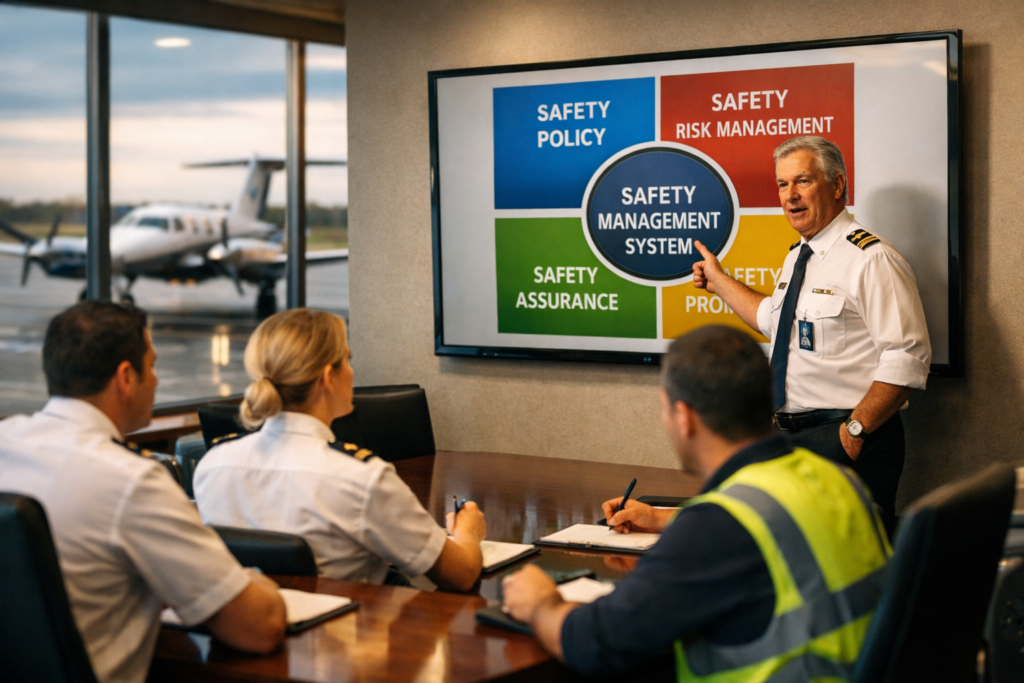
Archives for » Page 3 FAA Part 5 SMS Compliance Training for Part 135 Operators: What You Need to Know On April 26, 2024, the FAA published the final rule making Safety Management Systems mandatory for Part 135 operators — and the compliance clock has been running ever since. Part 135 certificate holders now have […]
Ground Effect in Aviation: Takeoff, Landing & Safety

Archives for » Page 3 Why Ground Effect Matters in Real-World Flight Operations A pilot rotates on a warm afternoon at a high-elevation airport. The aircraft lifts off and seems to fly — for a few seconds. Then, climbing through 30 feet AGL, the aircraft shudders, drag spikes, and the climb rate drops to zero. […]
How Professional Pilots Can Recognize and Avoid Microburst Hazards

Archives for » Page 3How Professional Pilots Can Recognize and Avoid Microburst Aviation Hazards Why Microbursts Remain One of Aviation’s Most Dangerous Weather Threats A microburst spans less than 2.5 miles — yet within that narrow footprint, wind speeds can shift by 30 to 90 knots, and downdrafts can reach approximately 6,000 feet per minute. […]
ADM Aviation: Aeronautical Decision Making for Part 135 & 91

Archives for » Page 3 ADM Aviation: How Part 135 and Part 91 Pilots Use Aeronautical Decision Making to Reduce Risk When was the last time you made a decision not to fly? The FAA and NTSB consistently find that human factors and judgment errors remain among the most persistent contributors to general aviation accidents […]
Emergency Landing Procedures: Part 91 & Part 135 Pilot Guide

Archives for » Page 3 Emergency Landing Procedures Every Part 135 and Part 91 Pilot Should Know Introduction: Why Emergency Landing Mastery Saves Lives Approximately 20% of all general aviation accidents involve forced landings or engine-related failures — yet 85% of survivable emergency landings are associated with pilots who followed a single foundational principle: fly […]
Corporate Aviation Security Training for Part 91 Flight Departments

Archives for » Page 3 Corporate Aviation Security Training: What Part 91 Flight Departments Should Cover Why Part 91 Flight Departments Can’t Afford to Ignore Security Training Only 35% of Part 91 corporate flight departments have a formal security training program in place — yet 70% of aviation security incidents stem from insider threats that […]
Situational Awareness in Aviation: Part 135 & 91 Pilot Guide

Archives for » Page 3 How Part 135 and Part 91 Pilots Improve Situational Awareness in the Cockpit Why Situational Awareness in Aviation Remains the Most Critical Safety Factor Approximately 80% of aviation accidents involve human factors — and loss of situational awareness is one of the most frequently cited contributors. Situational awareness in aviation […]
Jeppesen Charts Explained: Part 91 & Part 135 Pilot Guide

Archives for » Page 3 Jeppesen Charts Explained: A Practical Guide for Part 135 and Part 91 Pilots When was the last time you briefed a Jeppesen charts approach and felt genuinely confident you weren’t missing anything? Not just running through the motions, but certain you caught every detail that mattered for that specific procedure, […]