
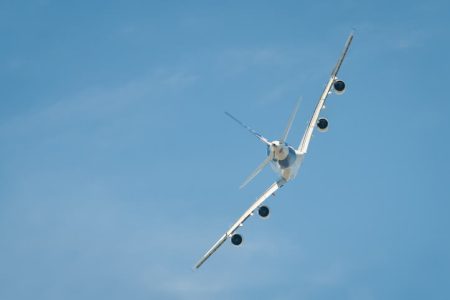
Why Load Factors Matter to Critical Angle of Attack
Load factor describes the ratio of lift an aircraft must produce compared to its weight. In straight-and-level, unaccelerated flight, that load factor is 1G. However, the moment an aircraft enters a turn, pulls abruptly, or maneuvers aggressively, the load factor increases. As load factor rises, the wing must produce more lift—and it does so by increasing angle of attack (AOA). This relationship is critical because a higher load factor brings the wing closer to its critical AOA, even when airspeed appears safe.
Bank Angle and the Invisible Rise in Stall Speed
In a coordinated level turn, load factor increases as bank angle increases. A 45° bank produces approximately 1.4 Gs, while a 60° bank doubles the load factor to 2 Gs. While the critical AOA itself does not change, the airspeed required to reach it increases significantly. This is why stalls that occur in turns are often called accelerated stalls—they happen at airspeeds well above published stall speeds.
Key relationships pilots must remember:
- Load factor increases with bank angle
- Stall speed increases with the square root of load factor
- AOA increases to meet lift demand
- Airspeed alone does not reveal proximity to stall
A pilot can be “well above stall speed” and still stall the airplane.
Why This Matters in Real-World Flying
This aerodynamic reality affects pilots at every experience level. General aviation pilots encounter elevated load factors during steep turns, base-to-final overshoots, turbulence, and maneuvering close to the ground. Professional pilots experience them during circling approaches, missed approaches, upset recovery, and other high-workload environments. In both cases, the danger lies in not recognizing how quickly AOA increases as G-load increases—especially when pilots instinctively pull instead of unload.
Accident Patterns and Loss of Control
Many loss-of-control accidents follow the same tragic pattern: increasing bank angle, tightening turn radius, rising load factor, and an unrecognized approach to the critical AOA. Often, airspeed still appears “safe” on the indicator right up until the stall occurs. These accidents frequently happen at low altitude, leaving little or no room for recovery. The common thread is not lack of skill—it is lack of AOA awareness during maneuvering flight.
Typical contributing factors include:
- Steep turns close to the ground
- Abrupt or aggressive control inputs
- Distraction or task saturation
- Overreliance on airspeed
- Failure to unload the wing
Why Angle of Attack Awareness Changes Everything
Angle of attack indicators shine in exactly these scenarios. Because they automatically account for load factor, they give pilots immediate, intuitive feedback on how close the wing is to its critical AOA — regardless of bank angle, weight, or airspeed. When a pilot sees rising AOA during a turn, the solution becomes clear: reduce AOA before lift is lost. This reinforces a safer, more aerodynamic mindset—one that prioritizes wing awareness over numbers on a dial. For both GA and professional pilots, understanding load factor in turns is not academic knowledge—it is a cornerstone of stall prevention and loss-of-control avoidance.