Accelerated Slipstream, The Force that Shapes Takeoff, Climb, and Control
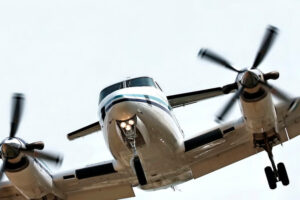
When pilots think about propellers, they usually think in terms of thrust — air being pushed backward to move the airplane forward. But a propeller does something else at the same time: it accelerates a corkscrewing stream of air that flows over large portions of the airplane. This airflow, called accelerated slipstream, has a powerful and often underappreciated effect on how the airplane flies, especially at low airspeeds and high power settings.
What IS Accelerated Slipstream
Accelerated slipstream is exactly what it sounds like: air that has been sped up and twisted by the propeller before it flows over the fuselage, wings, and tail. Unlike the smooth, straight relative wind the airplane sees in cruise, slipstream is faster, more turbulent, and strongly directional. It is also highly dependent on power. The harder the engine is working, the more influence the propeller has on the airflow over the airplane.
This is why airplanes often feel more responsive on the controls when power is added, even before airspeed has a chance to build. At high power and low airspeed, the propeller is not just providing thrust — it is actively blowing air over the tail surfaces, helping the elevator and rudder do their jobs when the wings alone are not yet very effective.
The Effects of Accelerated Slipstream on an Aircraft
In practical terms, accelerated slipstream has several important effects on how the airplane behaves:
- It increases airflow over the tail, improving elevator and rudder effectiveness at low speed.
- It changes the local angle of attack on parts of the wing and tail.
- It contributes to yawing tendencies, especially at high power.
- It improves control authority during takeoff, climb, and go-around.
This is why the airplane can sometimes feel surprisingly solid on the controls during rotation or initial climb, even though the airspeed is still relatively low.
When it Matters
Slipstream effects are strongest exactly when pilots tend to be closest to the edges of the performance envelope. Accelerated slipstream is most pronounced when:
- Power is high.
- Airspeed is low.
- The airplane is in a high pitch attitude.
In other words, exactly when you are:
- Taking off.
- Climbing.
- Going around.
- Recovering from slow flight.
- Operating near the edge of the performance envelope.
At these times, the propeller may be providing more control effectiveness than the wings alone, especially over the tail.
Another important characteristic of the accelerated slipstream is that it does not flow straight back. It wraps around the fuselage in a spiral. On most American single-engine airplanes, this spiral strikes the left side of the vertical stabilizer, pushing the tail to the right and yawing the nose to the left. This is a major contributor to left-turning tendencies and one of the reasons right rudder is so important during high-power, low-speed operations.
Dangers of Accelerated Slipstream
One of the most subtle — and most dangerous — aspects of accelerated slipstream is that it can mask how slow you really are. Because the propeller is blasting air over the tail, the controls may feel firm, responsive, and perfectly normal even when the wing is operating very close to its critical angle of attack. The airplane can feel “happy” right up until it isn’t.
When power is reduced, that extra airflow over the tail disappears almost instantly. Control effectiveness can drop sharply, and the airplane may suddenly feel mushy or unstable. This is why some power-on stalls and go-around accidents are so surprising to pilots: the airplane felt fine just moments earlier, but it was being held together by propeller slipstream rather than true aerodynamic margin.
Conclusion
In the end, accelerated slipstream is not just a background effect — it is part of the control system of the airplane. It helps you rotate, helps you climb, and helps you maintain control at low airspeed. But it can also hide shrinking margins and low-energy states if you’re not paying attention. Understanding when you are flying on clean airflow versus propeller-blown airflow is a big step toward better energy management and safer flying. And here is where things get even more interesting. In single-engine airplanes, accelerated slipstream is mostly a helper — and sometimes a liar. In multi-engine aircraft, it becomes a decisive asymmetric force that can determine whether the airplane climbs or rolls and yaws out of control.
RELATED READING
RELATED CTS TRAINING