Aviation Hazmat Training: Will-Not-Carry and Will-Carry Programs Explained
Aviation hazmat training is a regulatory obligation that catches many operators off guard. If your operation has a Will-Not-Carry policy, does that mean your pilots and ground crew can skip hazmat training? The answer is no — and the FAA’s escalating record of lithium battery incidents since 2006 makes the stakes of getting it wrong higher than ever.
Why Aviation Hazmat Training Is Non-Negotiable for Every Operator
Aviation hazmat training is a regulatory obligation for every air carrier operating under an FAA certificate — whether that carrier accepts dangerous goods or explicitly refuses them. The governing framework, 49 CFR Parts 171–180, draws no exceptions for operators who believe their Will-Not-Carry status shields them from training requirements. It does not. Dangerous goods training in aviation applies across the board, and FAA hazmat compliance training expectations are codified in every operator’s Operations Specifications.
Before any air carrier commences operations, it must hold an FAA Air Carrier Certificate with OpSpecs that explicitly address dangerous goods — either permitting or prohibiting their carriage. This determination creates two distinct program structures: Will-Carry and Will-Not-Carry. Each demands its own manual framework, employee training scope, and audit documentation. Even under a Will-Not-Carry designation, operators must train personnel to recognize, refuse, and report hazardous materials.
This article gives safety officers, training managers, and pilots the operational clarity they need to build a compliant program under either designation. We will break down what each program requires, who must be trained, how initial and recurrent timelines work under both US and international rules, and what it takes to pass an FAA inspector audit without scrambling.
What Are Will-Carry and Will-Not-Carry Hazmat Programs?
The distinction between Will-Carry and Will-Not-Carry hazmat aviation programs is not a matter of preference — it is a regulatory designation embedded in an operator’s FAA Operations Specifications. Both programs require deliberate structure, documented training, and aligned manuals. Neither is a checkbox exercise.
The most widespread compliance gap in the industry stems from a single misconception: that a Will-Not-Carry designation eliminates aviation hazardous materials training obligations. It does not. Personnel must still be trained to identify and refuse hazmat, and the operator’s manuals must reflect that policy with the same rigor expected of a Will-Carry operation.
Will-Carry: Accepting and Transporting Dangerous Goods
A Will-Carry program authorizes an air operator to accept, handle, and transport hazardous materials as cargo or COMAT (company materials) in compliance with 49 CFR Parts 171–180 and applicable FAA operating rules under 14 CFR Part 121 or Part 135. Operationally, this means the carrier must perform acceptance checks, verify proper packaging and labeling, confirm correct stowage, maintain cargo documentation, and ensure crew notification for every hazmat shipment.
The operator’s hazmat manual must align precisely with its OpSpecs and be audit-ready for FAA inspectors at all times. COMAT handling is a commonly overlooked Will-Carry obligation — operators who ship their own batteries, cleaning agents, or maintenance chemicals as company materials are performing hazmat transport and must treat it accordingly.
Will-Not-Carry: Refusal Protocols and Training Obligations
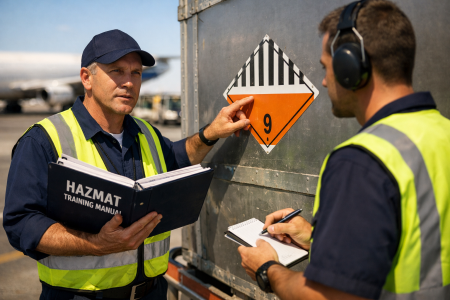
Will-Not-Carry operators must still train employees to recognize hazardous materials, properly refuse shipments, and understand what items passengers may inadvertently carry aboard. Ground crew, ticket agents, ramp personnel, and pilots all need awareness-level training under this policy. Prohibition does not equal exemption from training — it changes the scope, not the requirement.
The Air Compliance Consulting Group (ACCG) recommends that Will-Not-Carry operators maintain tailored hazmat manuals that document refusal protocols and awareness training programs. These manuals simplify FAA inspector audits and demonstrate that the operator has taken its Will-Not-Carry designation seriously rather than treating it as an excuse to ignore dangerous goods entirely.
Who Needs Aviation Hazmat Training? Roles and Requirements
Under 49 CFR 172 Subpart H, all personnel involved in the preparation or transport of hazardous materials qualify as hazmat employees and must receive function-specific training. For Will-Not-Carry operators, relevant personnel still require awareness training. The regulatory basis does not limit training obligations to cargo handlers alone.
A common misconception is that pilots are exempt if they do not physically handle cargo. Hazmat training for pilots is not optional under Part 135 hazmat training compliance scenarios — pilots who accept cargo, sign for shipments, or operate aircraft carrying dangerous goods are considered hazmat employees. Hazmat training for charter pilots under Part 135 follows the same regulatory framework as all other hazmat employees.
The following roles carry specific training obligations:
- Cargo acceptance agents: Must complete comprehensive training on identification, classification, packaging verification, documentation, and acceptance/rejection procedures.
- Pilots and flight crew: Must receive training on recognition, emergency response, crew notification procedures, and — for Will-Carry operations — loading and stowage awareness.
- Ground handlers and ramp personnel: Must be trained on recognition, labeling, safe handling, and loading procedures specific to their function.
- Flight dispatchers: Must understand NOTOC (Notification to Captain) procedures and emergency response information.
- Ticket counter and gate agents: Must be trained to ask appropriate passenger screening questions and recognize prohibited items.
Function-specific training content differs by role. A cargo acceptance agent’s curriculum covers material a pilot will never need, and vice versa. One-size-fits-all programs create compliance gaps.
Initial and Recurrent Hazmat Training Requirements Under FAA and ICAO
Training timelines are where compliance programs succeed or fail. The US and international frameworks impose different deadlines for both initial hazmat training for aviation employees and recurrent cycles, and operators who fly international routes must satisfy the stricter standard.
US Requirements: The 90-Day Window and 3-Year Recurrent Cycle
Under 49 CFR 172 Subpart H, new hazmat employees must complete initial training within 90 days of employment or assignment to a hazmat function. During this 90-day window, the employee may perform hazmat duties only under the direct supervision of a properly trained individual. Once initial training is complete, the employee must pass a knowledge test — this is a regulatory requirement, not a best practice.
Recurrent hazmat training is required every three years, measured from the date of the employee’s last completed training. The recurrent cycle applies regardless of whether regulations have changed during the interval. Some operators mistakenly believe that stable regulations eliminate the need for refreshers. They do not. Knowledge degrades, personnel change roles, and new hazmat scenarios emerge — particularly around lithium batteries and evolving cargo profiles.
ICAO and IATA: Stricter Timelines for International Operations
The ICAO Technical Instructions and IATA Dangerous Goods Regulations impose a stricter standard: training must be completed before the employee performs any hazmat function. There is no grace period. No supervised work while awaiting training completion. This zero-tolerance approach reflects the international regulatory philosophy that competence must precede responsibility.
Recurrent training under ICAO and IATA follows a 24-month cycle — a full year shorter than the US requirement. IATA also mandates ongoing competence assessments, not merely a test at the end of a training module. For operators flying international routes, the differences between ICAO and FAA hazmat training recurrency create a compliance trap: satisfying the US 3-year cycle does not satisfy the 24-month international requirement. Many companies voluntarily adopt a 2-year recurrent training cycle to satisfy both frameworks simultaneously — a practice recommended by Currie Associates as an industry best standard.
Operators should build a compliance calendar that tracks both US and international recurrent cycles for every hazmat employee. Without centralized tracking, missed deadlines are inevitable.
Common Hazardous Materials in Aviation: What Crews Must Know
Lithium batteries remain the most frequent source of hazmat incidents and confusion in aviation. The FAA has tracked lithium battery incidents since 2006, and the data shows an escalating trend that underscores why crew training on this topic is essential. Understanding lithium battery transport regulations is a core competency for every aviation professional.
The watt-hour thresholds for passenger aircraft are specific:
- 0–100 Wh: Allowed on passenger aircraft (spare batteries must be in carry-on baggage with terminal protection).
- 101–160 Wh: Requires airline approval; limited to two spare batteries per passenger.
- Over 160 Wh: Forbidden on passenger aircraft. This includes many large portable power stations now common among travelers.
- Damaged or recalled batteries: Always prohibited, regardless of watt-hour rating.
Beyond lithium batteries, crews must recognize other frequently encountered items. Aerosols, paints, and camping fuels are prohibited in checked and carry-on baggage, yet passengers routinely attempt to bring them aboard. The FAA’s PackSafe program provides passenger-facing guidance on what can and cannot fly, and crew training should incorporate these guidelines as a reference tool.
Aviation hazmat training should also address recognition of undeclared hazmat — shipments or passenger items that contain dangerous goods without proper identification. Crew protocols for in-flight fire response related to lithium batteries, including the use of fire containment bags and suppression procedures, belong in every operator’s training curriculum.
Emerging Developments: UAS Hazmat Transport and Regulatory Outlook
The hazmat training requirements for aviation are expanding beyond traditional crewed aircraft. Between October 2025 and March 2026, FAA and PHMSA issued guidance establishing risk-based standards and special permits for hazmat transport by unmanned aircraft systems (UAS). This marks a significant regulatory milestone: drones carrying dangerous goods will operate under a structured compliance framework with defined training obligations.
For UAS operators entering regulated cargo transport, this means developing new training programs aligned with PHMSA hazmat compliance requirements and FAA operational standards. The guidance uses a risk-based approach, meaning UAS hazmat transport regulations will scale with the type, quantity, and route profile of the materials carried. Operators accustomed to Part 107 operations will face an entirely new layer of regulatory responsibility.
This development reinforces a broader truth: the regulatory environment around hazmat transport continues to evolve, and recurrent training must keep pace. Operators who invest in scalable training platforms — capable of integrating new regulatory content as it emerges — will be better positioned than those relying on static, outdated curricula.
Building an Audit-Ready Aviation Hazmat Training Program
An FAA hazmat compliance training program is only as strong as its documentation. When an inspector arrives, they expect to see manuals aligned with your OpSpecs, records of all initial and recurrent training completions, post-training test results, and competence verification documentation. Meeting FAA OpSpecs hazmat manual requirements means your written program matches your operational designation — Will-Carry or Will-Not-Carry — without gaps or contradictions.
The ACCG recommends tailored hazmat manuals for both Will-Carry and Will-Not-Carry operations, structured specifically to meet FAA inspector expectations. Generic templates introduce risk. Your manual should reflect your actual operation, your actual personnel, and your actual OpSpecs language.
Key elements of an audit-ready aviation hazmat training program include:
- Compliance calendar: Track both 3-year (US) and 24-month (ICAO/IATA) recurrent cycles for every hazmat employee.
- Testing records: Maintain documentation of post-training assessments and any IATA competence verification requirements.
- Function-specific curricula: Ensure each role receives training appropriate to its hazmat responsibilities — not a generic overview.
- Refresher cadence: Consider training every 2 years, as recommended by Currie Associates, to satisfy both domestic and international requirements simultaneously.
Scalable e-learning platforms designed for aviation operators provide the most efficient path to managing these obligations across a distributed workforce. Purpose-built platforms can deliver function-specific content, track completions, and adapt to regulatory updates without requiring a manual overhaul. Explore CTS’s FAA-compliant Hazmat Training courses — available in both Will-Carry and Will-Not-Carry formats — and ensure your operation is audit-ready today.
Frequently Asked Questions About Aviation Hazmat Training
What is the difference between Will-Carry and Will-Not-Carry hazmat programs in aviation?
A Will-Carry program authorizes an operator to accept, handle, and transport hazardous materials as cargo or COMAT under 49 CFR Parts 171–180. A Will-Not-Carry program prohibits hazmat acceptance but still requires personnel training on recognition and refusal protocols. Both designations are codified in FAA Operations Specifications, and both require documented training programs — only the scope differs.
How often is hazmat recurrent training required for aviation employees?
Under US regulations (49 CFR 172 Subpart H), hazmat recurrent training is required every 3 years. Under ICAO Technical Instructions and IATA Dangerous Goods Regulations, the cycle is every 24 months. Many operators train every 2 years to satisfy both frameworks. Recurrent training is mandatory regardless of whether regulations have changed during the interval.
Do pilots need hazmat training if they don’t handle cargo?
Yes. Pilots involved in transport operations may be classified as hazmat employees under 49 CFR 172 Subpart H, particularly under Part 135 operations where they accept cargo or sign for shipments. Even under Will-Not-Carry operations, pilots require awareness-level training to recognize prohibited items and understand emergency response procedures for undeclared hazmat.
What are the FAA requirements for initial hazmat training under 49 CFR Part 172?
Under 49 CFR 172 Subpart H, initial hazmat training must be completed within 90 days of employment. During this period, the employee may perform hazmat functions only under direct supervision. Post-training testing is required per 49 CFR 172 Subpart H. By contrast, ICAO and IATA require training completion before the employee performs any hazmat function — no grace period is provided.
Are lithium batteries allowed on passenger aircraft under FAA hazmat rules?
Lithium batteries up to 100 Wh are permitted on passenger aircraft. Batteries rated 101–160 Wh require airline approval, with a limit of two spare batteries per passenger. Batteries exceeding 160 Wh are forbidden on passenger aircraft. Damaged or recalled lithium batteries are always prohibited regardless of watt-hour rating. The FAA’s PackSafe program provides detailed passenger guidance.